Training Products for Improved Workplace Performance

0 items in cart @ $0.00 | view cart

Catalog Request
Webcasts
Experiential Learning
::: Reproducible Programs
::: Customizable Games
::: Tote & Train Programs
::: PowerPoint e-Learning
HRDQ Online Assessments
Career Development
Change
Coaching & Mentoring
Communication
Conflict
Diversity
Innovation & Creativity
Customer Service
Emotional Intelligence
Leadership
Learning
Performance Management
Personality Style
Project Management
Problem Solving & Decision Making
Selling & Negotiation
Supervision
Teams
Additional Titles
Free Resources

Home > Learning > Learning Styles Questionnaire


Learning Styles Questionnaire


Bookmark and Share

Learning Styles Questionnaire
 
Synopsis 
 
The Learning Styles Questionnaire is a management development training assessment for organizational learning and adult learners. It identifies personal learning style, surfaces team learning issues, balances group learning styles and helps adult learners become focused.


Please note:

This product (including online versions) cannot be shipped to Australia, New Zealand, or the UK.
 
Overview
 
Organizations invest in training and development because they want people to do something differently, or more skillfully, on the job. They want learning experiences to be efficient and effective so that adult learners can apply new skills quickly in the real world, where it counts.
 
But “efficient and effective” does not imply the same approach for everyone. We do not all learn alike. We approach and absorb new experiences differently. The more insight individuals have into how they learn best, the better equipped they are to master any new skills or knowledge in any learning environment.
 
The Learning Styles Questionnaire is an assessment for adult learners that identifies preferences for one of four styles identified by leading researcher and learning theorist David Kolb: Activist, Reflector, Theorist, or Pragmatist.
 
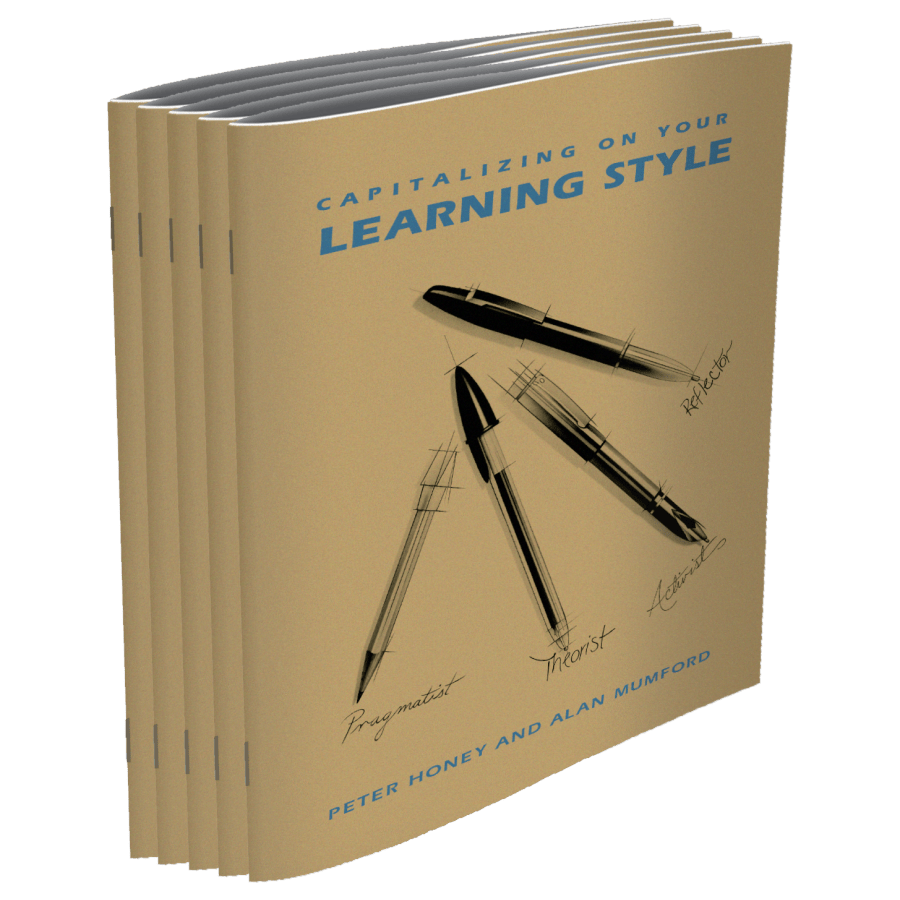
Extremely useful in management development programs or team learning situations, the Learning Styles Questionnaire and its accompanying workbook, Capitalizing On Your Learning Style, help individuals maximize their strengths, compensate for weaknesses, and develop their less dominant styles. The Learning Styles Questionnaire also may be used to surface team learning issues or to balance training methods to accommodate the different learning preferences in a group.
 
Learning Outcomes
  • Identify individual learning style preferences
  • Increase the awareness of learning activities that are congruent or incongruent with individual learning styles
  • Learn how to maximize learning strengths
  • Develop less dominant learning styles
  • Balance the learning styles of groups
  • Surface team learning difficulties
  • Expand learning style range

Theory and Development

Authors Honey and Mumford based the Learning Styles Questionnaire primarily on Kolb’s 4-stage process of learning. Kolb’s basic premise was that learning is the result of a series of experiences with cognitive additions rather than a series of pure cognitive processes. However, Honey and Mumford diverge from Kolb’s theory in two ways. First, they built their own views of the learning styles and the Questionnaire around recognizable statements of learner behavior. Second, their belief is dominated by the view that the answers secured from the Questionnaire are a starting point, not a finishing point.

Honey and Mumford identify 4 main learning styles:

Activists
Involve themselves fully and without bias in new experiences, enjoy the here and now, and are gregarious people.
 
Reflectors
Stand back to ponder experiences, collect data, tend to postpone reaching definitive conclusions, and have a slightly distant, tolerant, unruffled air about them.  
 
Theorists
Adapt and integrate observation into complex but logically sound theories, tend be perfectionists, and can be detached and analytical.
 
Pragmatists
Try out theories to see if they work in practice, act quickly and confidently on ideas that attract them, are impatient with ruminating discussions, and are essentially down-to-earth.  
Uses for the Assessment
 
The Learning Styles Questionnaire is effective both as a stand-alone learning instrument or as part of a more comprehensive training program. Here are some suggested applications: 
  • Balance the learning styles of groups
  • Help trainers identify the dominant learning style of participants
  • Surface team-learning difficulties
  • Help managers understand and motivate their employees
  • Discuss the learning process
  • Help participants expand their learning style range  

How It Works

The Learning Styles Questionnaire starts with an 80-item self assessment that takes individuals approximately 30 minutes to complete. The result is a score for each of the four learning styles: Activist, Reflector, Theorist, and Pragmatist. The highest score is the individual’s dominant learning style. A four-quadrant model plots the four learning styles, and norms provide a point of reference for individuals.

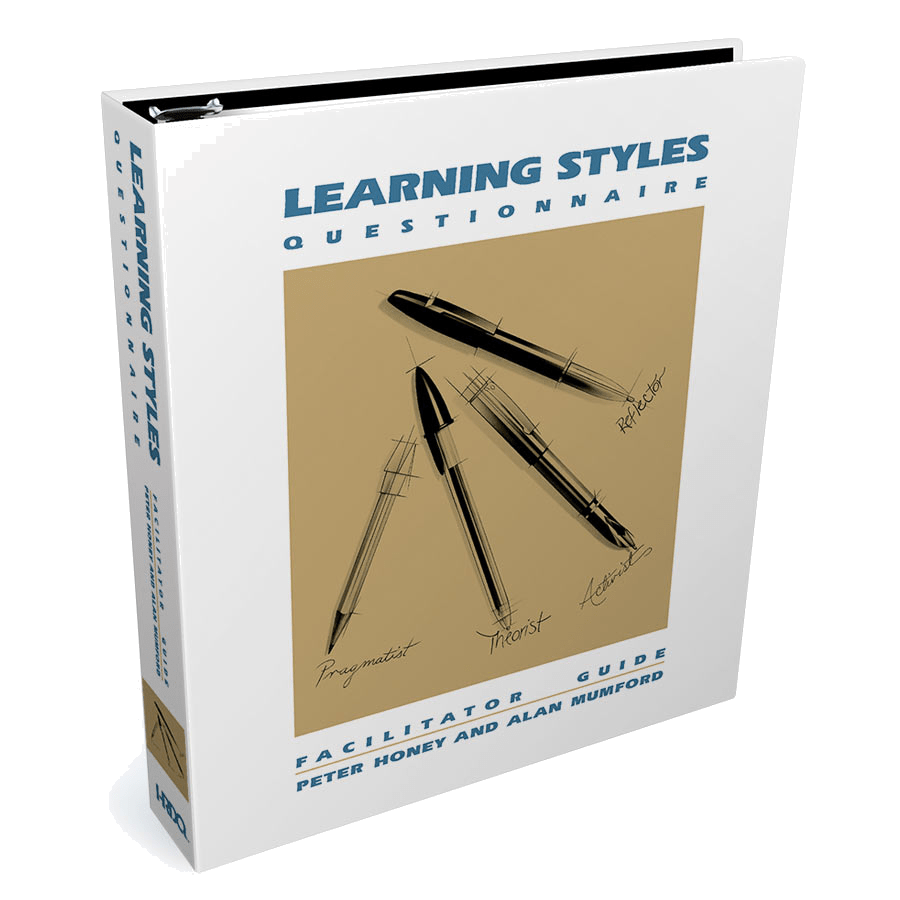
If you intend to use the Learning Styles Questionnaire for classroom training, we recommend you allow approximately 1.5 hours for interpretation of scores, topic discussion, debrief, and action planning. The Learning Styles Questionnaire Facilitator Guide includes everything you need to lead a successful training session from comprehensive background information and activities, to reproducible handouts and even a professional PowerPoint presentation. The Facilitator Guide also offers an easy-to-follow workshop outline that expands the Learning Styles Questionnaire into a half-day program.

What to Order

Learning Styles Questionnaire is available in both Online and Print Versions.

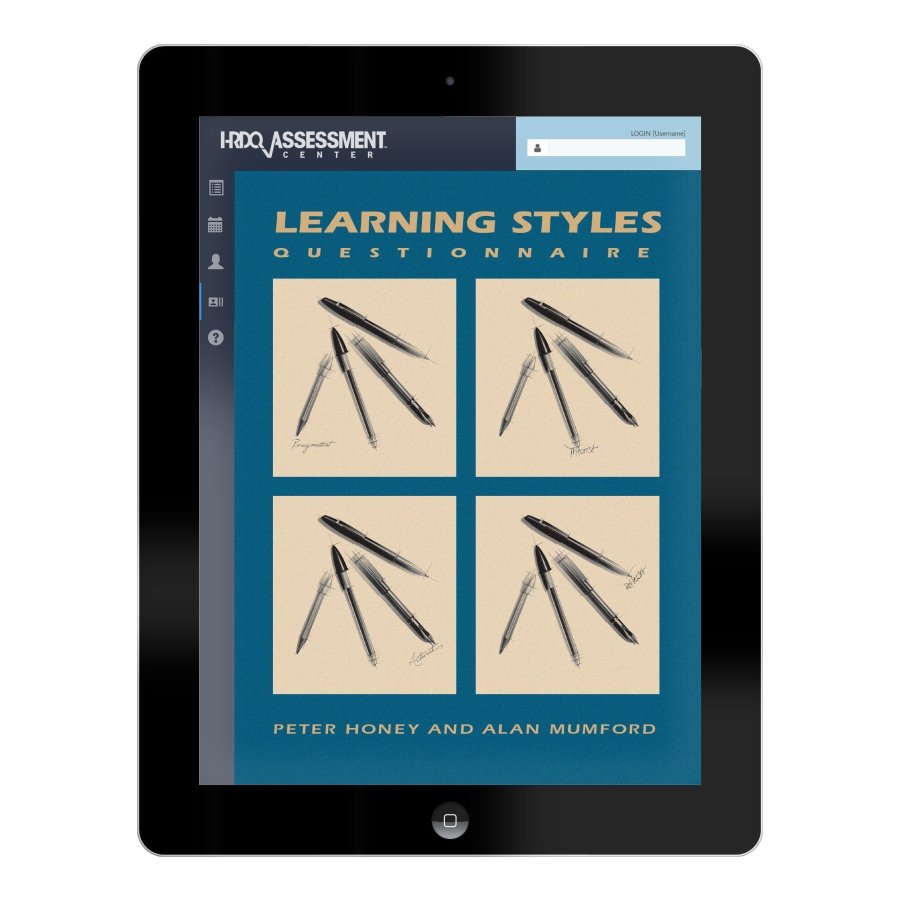
The Online Version is an excellent choice for enterprise-wide training or audiences that are geographically dispersed. It offers 24/7 access, streamlined distribution, and instant scoring. Each Online Assessment includes personalized reporting, full-color charts, interpretive information, worksheets, and action planning.

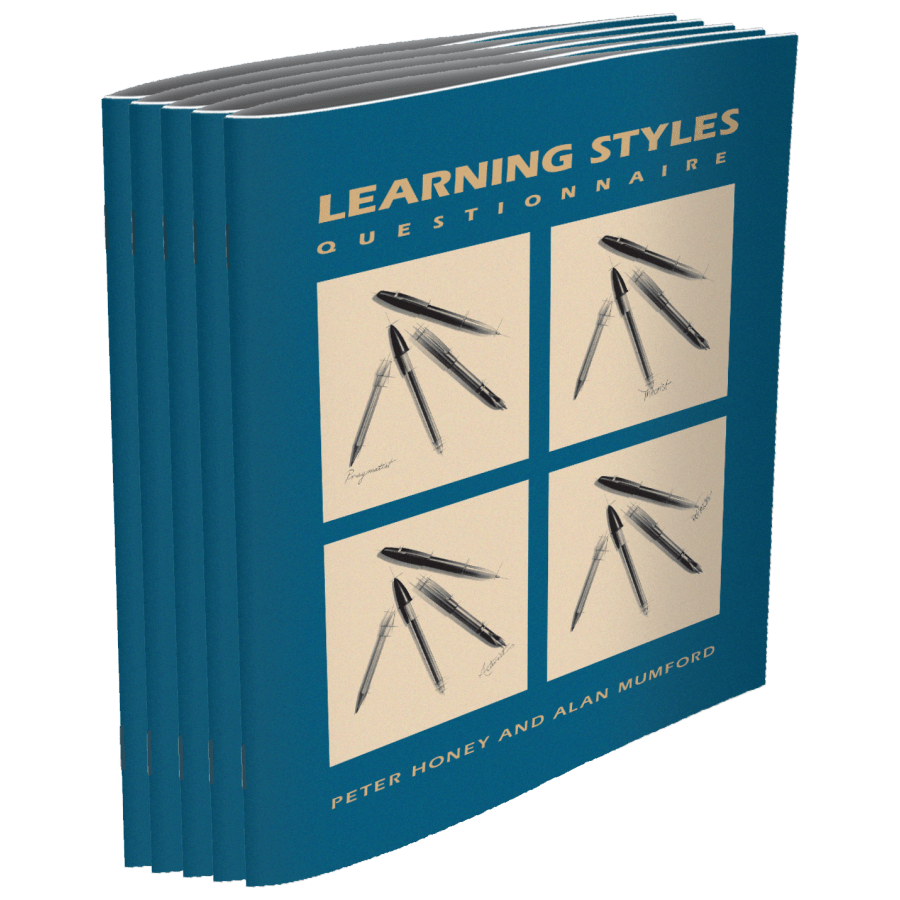
The Print Version is ideal for facilitators who prefer to oversee scoring and administration of the assessment, if you don’t know who the participants will be before the class begins, or if your learners do not have easy access to computers. Includes pressure-sensitive forms for scoring to aid manual tabulation. The accompanying Participant Guide includes interpretive information, worksheets, and action planning.
 
Initial Rollout
 
You will need to order a Facilitator Guide per trainer and either 1 Print Participant Guide or 1 Online Assessment for each individual learner. We also recommend purchasing a Capitalizing on Your Learning Style Workbook for each individual.
 
The Starter Kit is a great way to begin your rollout and includes a Facilitator Guide, 5 Print Participant Guides or 5 Online Assessments, and 5 Workbooks. Additional Workbooks, Participant Guides, and Online Assessment credits may be purchased separately. Purchasing all of the participant materials you need at one time may qualify you for quantity discounts that can save you money and simplify ordering.

If you are new to this product we highly recommend HRDQ QuickStart Training, whether you are a novice trainer or a seasoned facilitator. It’s an excellent way to quickly get up to speed on the product so you can step into your first training class with confidence. Personalized, one-on-one telephone coaching is provided at your convenience. Our subject matter experts will review the program with you, offer ideas for tailoring the program to your specific needs, discuss typical participant questions and reactions, and more. 
 
Ongoing Training

Each time you administer the assessment you will need to order a new Print or Online Assessment and a Workbook for each individual. Quantity discounts begin at 50 units per order. Additional Facilitator Guides are also available for individual purchase if you have additional trainers or require a new copy. 

Related Products

Product Type

Assessment

Time Required 

Scoring:  30 minutes

Authors 

Peter Honey
Alan Mumford 
Products (Total Items: 7)
Learning Styles Questionnaire - Theoretical Background Learning Styles Questionnaire - Theoretical Background
Learning Styles Questionnaire - Theoretical Background
Quantity
Capitalizing On Your Learning Style - Workbook Capitalizing On Your Learning Style - Workbook
1 Print Participant Workbook
$12.00
Quantity
Learning Styles Questionnaire - Participant Guide Learning Styles Questionnaire - Participant Guide
1 Print Participant Guide
$12.00
Quantity
Learning Styles Questionnaire Online Self-Study Registration Learning Styles Questionnaire Online Self-Study Registration
Instant access to the self-study version
$12.00
Quantity
Learning Styles Questionnaire - QuickStart Training Learning Styles Questionnaire - QuickStart Training
Telephone coaching for facilitators
$595.00
Quantity
Learning Styles Questionnaire Online Learning Styles Questionnaire Online
Assessment Center Credit Purchase
$12.00
Quantity
Learning Styles Questionnaire - Facilitator Guide Learning Styles Questionnaire - Facilitator Guide
Facilitator Guide
$109.00
Quantity
Bookmark and Share

Request a catalog by mail

HRDQ e-Mail Updates


Follow Us on Twitter

Connect With Us On LinkedIn